Clear work. Clear responsibility.
Assign responsibility for punch list items and defects, with the location, photos, priority and notes in one record. Keep your team in control of review and follow-up.
For builders and supervisors who need contractor accountability without losing photos, pins, notes, priorities, and report context.
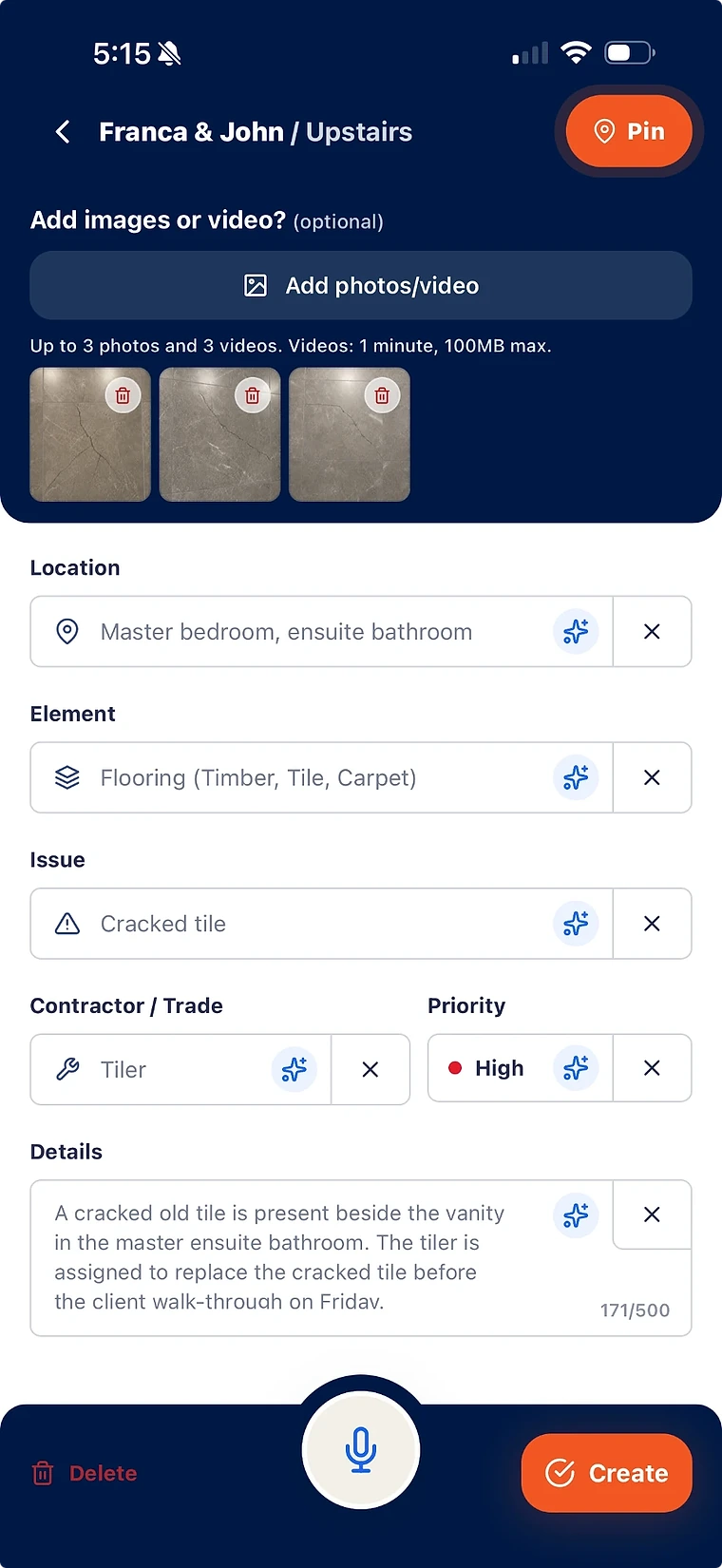
Assign defects with trade and contractor context.
Track open, in-progress, and resolved work before handover.
Keep contractor responsibility visible inside the final closeout record.
WhatsApp participation is forthcoming
Builders use SiteWarden. The planned contractor workflow uses WhatsApp without a SiteWarden download or account.
- Receive repair instructions and send photos or voice updates naturally.
- One update can cover several defects; unclear matches require clarification.
- Reported finished and approved remain separate. Your team accepts the work.
- Forthcoming as a Business option; availability and messaging allowances will be confirmed before launch.
Keep repair context beside the conversation
Contractors need clear location, issue, priority and evidence context. The planned WhatsApp workflow keeps that context connected while letting contractors send ordinary site updates.
- Send work from a structured defect record rather than a loose photo.
- Separate urgent blockers from lower-priority closeout items.
- Keep the completion trail tied back to the original defect.
Builder-side control
SiteWarden is positioned for the builder and project team who need to control the closeout record while coordinating contractors.
- Contractor owner, trade, priority, and status stay visible.
- Quality teams can review report readiness before client handover.
- Final reports can show what was recorded and how it was tracked.
Can contractors reply through WhatsApp?
That workflow is forthcoming. The planned experience supports ordinary photos, voice notes and multi-defect updates, without a SiteWarden account. Builder approval remains separate from contractor completion claims.
How do you assign defects to contractors?
Each defect can include trade and contractor ownership, priority, status, location, photos, and notes so the responsible party has clearer repair context.
Why track contractor ownership in defect management?
Ownership makes unresolved work easier to chase, review, and explain during closeout and handover reporting.
Does this cover subcontractor defect management?
Yes. Contractor and subcontractor defect management are the same loop: the subbie responsible for the trade gets the assigned defect with full repair context, uploads completion proof, and the builder verifies before the item closes.
Can I use SiteWarden for punch lists and defects?
Yes. Use project lists to record work that needs finishing or fixing, with photos, locations, trades, priorities and statuses. The current app labels these records as defects; the same record can describe unfinished work or an issue that needs repair.
How do contractors take part?
Your team assigns responsibility and controls review and approval. Contractor replies through WhatsApp are forthcoming and are not included in the current trial. In that planned workflow, contractors will send photos, voice notes and progress updates without a SiteWarden account; the builder will still approve the work.
Bring your list.
We’ll walk you through it.
Unfinished work, defects and the details in between. See how the current app captures, organises and reports on them.